A year after their crackdown, Burma's military dictators remain entrenched, propped up by dealings with Western companies. But the Burmese democracy movement has found a powerful pressure point according to avaaz.org — many of the Generals' West-linked business ventures depend on one insurer: Lloyd’s of London.
Lloyd’s is the world's oldest, most respected insurer, and cares a great deal about its global reputation. By pointing out Lloyd’s blameworthiness as key insurance deals come up for renewal, says Avaaz we can shift their cost-benefit calculations on support to the Burmese regime.
They are calling on people to email and call key decision-makers at Lloyd’s to shame them into pulling out of this dirty trade. This will help undermine the hardliners and creating pressure for human rights and the release of political prisoners like democratically elected leader Aung San Suu Kyi.
The Foreign Office has written to Lloyd's of London chairman Lord Levene to outline its disapproval that Lloyd's brokers are trading with the Burmese military dictatorship.
Avaaz say that, as in South Africa, international pressure on the regime's exploitative ventures could tip the balance; because it's hard or impossible for them to continue without insurance.
Already many big global insurers have stopped insuring junta-linked businesses – after Lloyd’s, the generals will start to run out of options.
Thursday, November 13
Burma: the UK link


Monday, May 26
Web power: Avaaz beats the Burmese colonels

This is a pretty amazing demonstration of how the Web is able to respond and deliver in ways unimaginable a decade ago.
In the days since a catastrophic cyclone struck Burma and killed over 100,000 people, Avaaz members have donated $2 million (almost 1.3 million Euros) to the aid effort. Our community has given more than many governments, and our aid hasn't been stopped at the border like theirs -- we've supported Burmese monks and other aid groups who have worked without their brutal government's permission.Avaaz.org is an international civic organization that promotes issues such as climate change and human rights. Its stated mission is to "ensure that the views and values of the world's people inform global decision-making." The organization operates in thirteen languages, and claims more than three million members from every country in the world.
It's been a challenge to get such a lot of money in. Most Burmese groups can safely move only a limited amount of money each day through informal networks. So far, we know that $550,000 has arrived in Burma and been spent, and an additional $1,000,000 is en route and may have arrived. We are currently working with the International Burmese Monk Organization and 7 other Burmese organizations, including monk groups, educational groups, and medical clinics, who have asked not to be named for their own security.And this is where that money's ended up.
The way the money moves is through informal transfers between bank accounts and by hand. Sometimes it is as simple as a deposit in one country that is then withdrawn inside Burma by the account holder and then carried to a monastery or aid group. Because many merchants do this, the Burmese government cannot tell the difference between commercial funds and aid money.
This work carries some dangers; Burmese junta has harassed and, in one case, attacked the groups we are working with. But in the vast majority of cases, soldiers simply arrive, warn our partners that their work must be authorized by the government, and leave. Once they are out of sight, the aid work continues.
It is a challenge in such circumstances to exercise complete oversight over how the money is used -- most of the work is in secret. But we have chosen to work only with the most universally respected institutions, and we have asked them to provide detailed lists of monasteries and groups who receive it. These details allow us to verify receipt of the funds.
View Larger Map
Here's their donation page.
Friday, January 25
On Day One

The Better World Campaign, a coalition of groups which works to build a stronger relationship between the United States and the United Nations, is trying to raise the status of foreign policy in the US Presidential campaign with this new site.
It wants overseas contribution and will sort and sieve it to provide some real numbers, if it's taken up.
On November 4th, 2008, Americans will elect new leadership and a new direction for the United States. Help shape a new way forward -- share your thoughts, upload videos and tell the next president what to do on the first day in office to improve our standing in the world.You can:
- Post your ideas (including videos) for the next President
- Vote on and discuss other people's ideas
- Tell the Presidential candidates (and friends and family) what you think
 Mohammed Yunus, amongst others, has already contributed.
Contributions will be whittled down to the most popular in each of nine categories. They will then be presented to the newly-elected president when he or she is sworn in.
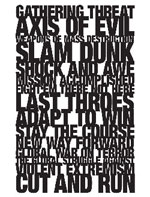
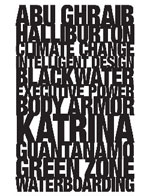
Here are some aides memoire:
Tuesday, October 16
Dictatorship 2.0: Bloggers as targets

Reporters Without Borders 2007 Worldwide rankings — done on their website as plain, flat web pages and hence very easy to find useful info — have highlighted a number of countries slipping down the index because "of serious, repeated violations of the free flow of online news and information".
A decade ago, regime opponents in Vietnam or Tunisia were still printing leaflets in their basements and handing them out to fellow militants at clandestine meetings. Independent newspapers were no more than a few hastily-stapled photocopies distributed secretly.According to the group at least 64 people are currently imprisoned worldwide because of postings on the web, eight of them in Vietnam.
These days, “subversive” or “counter-revolutionary” material goes on the Internet and political dissidents and journalists have become “cyber-dissidents” and “online journalists.” Most of them know how to create a blog, organise a chat group, make phone calls through a computer and use a proxy to get round censorship.
New technology allows them to receive and share news out of sight of the authorities.
The Web is also a blessing for human rights groups, which can now build a file on a political prisoner with a few mouse-clicks instead of over weeks and sometimes months.
The Web makes networking much easier, for political activists as well as teenagers. Unfortunately, this progress and use of new tools by activists is now being matched by the efforts of dictatorships to fight them. Dictators too have entered the world of Web 2.0.
 They flagged up the case of Abdel Kareem Soliman, an Egyptian blogger jailed for four years after he used his web log to criticise the country's top Islamic institution, al-Azhar university, and President Hosni Mubarak, whom he called a dictator.
The governments of repressive countries are now targeting bloggers and online journalists as forcefully as journalists in the traditional media.More and more governments have realised that the Internet can play a key role in the fight for democracy and they are establishing new methods of censoring it. The governments of repressive countries are now targeting bloggers and online journalists as forcefully as journalists in the traditional media.
In Malaysia (124th), Thailand (135th), Vietnam (162nd) and Egypt (146th), for example, bloggers were arrested and news websites were closed or made inaccessible.China maintains its leadership in this form of repression, with a total of 50 cyber-dissidents in prison.

Talking about Burma:
The Burmese government’s Internet policies are even more repressive than those of its Chinese and Vietnamese neighbours. The military junta clearly filters opposition websites. It keeps a very close eye on Internet cafes, in which the computers automatically execute screen captures every five minutes, in order to monitor user activity. The authorities targeted Internet telephony and chat services in June, blocking Google’s Gtalk, for example. The aim was two-fold: to defend the profitable long-distance telecommunications market, which is controlled by state companies, as well as to stop cyber-dissidents from using a means of communication that is hard to monitor.During the recent crisis the Net was, of course, a huge boon for journalists, but then the regime (like the Chinese) turned the tables, undercutting whether the Net makes any real difference:
Several Burmese journalists confirmed that the security services are circulating photos of demonstrators taken by citizen journalists or foreign reporters in police stations and among police informers. Scores of people have reportedly been arrested on the basis of these photos.The same photos sent over the Web, before the regime shut it down.
The Internet was not designed to protect message confidentiality. It is fast and fairly reliable but also easy to spy on and censor. From the first mouse-click, users leave a trail and reveal information about themselves and what their tastes and habits are. This data is very valuable to commercial firms, who sort through it to target their advertising better.
The police also use it. The best way to spy on journalists a few years ago was still to send a plainclothes officer to stand outside their house. This can be done more cheaply and efficiently now, because machines can spy, report back and automatically prevent subversive conversations.
Cuba has installed spyware in cybercafé computers so that when users type “banned” words in an e-mail, such as the name of a known political dissident, they see a warning that they are writing things considered a “threat to state security” and the Web navigator then immediately shuts down.
China keeps a tight grip on what is written and downloaded by users and spends an enormous amount on Internet surveillance equipment and hires armies of informants and cyber-police.It also has the political weight to force the companies in the sector - such as Yahoo!, Google, Microsoft and Cisco Systems - to do what it wants them to, and all have agreed to censor their search-engines to filter out websites overcritical of the authorities.
China has already signed an agreement with Skype to block key-words, so how can we be sure our conversations are not being listened to? How do we know if Skype will not also allow (or already has allowed) the Chinese police to spy on its customers?
It has become vital to examine new technology from a moral standpoint and understand the secondary effects of it. If firms and democratic countries continue to duck the issue and pass off ethical responsibility on others, we shall soon be in a world where all our communications are spied on.
 @PubSecBloggers