Gary Hayes from personalizemedia.com put together this very neat little widget which visualises the hyper-growth in usage of social media.
Showing posts with label facebook. Show all posts
Showing posts with label facebook. Show all posts
Wednesday, October 14
Just how big is social media? Watch this
Wednesday, August 26
RSS vs Twitter in local government: a serious imbalance?
 Image via Wikipedia
Number | % of LAs | ||
48 | 11% | ||
128 | 30% | ||
| YouTube | 63 | 15% | |
| RSS | 122 | 28% | |
| Web dev blogs/feeds | 6 | 1% |
Now I would argue that RSS is a bit misclassified here as 'social media'. That's one interpretation of it but another is as a data feed. That's what the Mash The State campaign is about, having feeds which can be 'auto-discovered' and are machine readable.
What shocked me in these numbers is that Twitter has in a few months been adopted by more councils than RSS over many years. You have to ask as well what 'RSS' use is being reported. Is it merely a feed of press releases extolling the greatness of the council as opposed to, say, planning applications or sports events? Mash The State's campaign is actually about the incredibly modest goal of all councils have a PR RSS feed by the end of this year. The bar has been set low by a campaign group: this speaks volumes.
So why is Mash The State modestly and quietly plodding along but Twitter shooting off and quickly overtaking? Fashion, what else could it be?
Local government webbies have spotted this trend and worked on that because it's easier and, frankly, because Twitter is in the news and can be thus more easily portrayed as a 'must-have'. It's 'low-hanging fruit', an 'easy win'.
It's not just Twitter. Web development blogs can be incredibly useful for webbie teams to get feedback on site development - that's why companies from Google to last.fm run them. But they require that bit extra of time and resources, and planning and arguing (and understanding) for their usefulness. So why are they so rare and why is there no research or group arguing for them or people demonstrating their ROI and giving them momentum?
Same goes for Facebook and YouTube (and the absent Myspace and Bebo): their collective use far outweighs Twitter so why are they much less prominent?
There's another danger here which is that which being prey to fashion has for the longer-term embedding of web in local government.
For councilors and many council staff (plus service users), who want to see and experience clear benefit, the potential for (open source) applications such as those being developed by #rewired state and #youngrewiredstate is far greater to my mind than it is from Twitter. But in the political and PR battle for the attention of Lgov webbies, especially its movers and shakers, are they losing attention and therefore potentially funding and other resources, like developer time?
These numbers should make Lgov people stop and think hard about what we're doing and where the priorities are. Yes Twitter is great and I love it but let's not just cheer what they say about the progress of social media and quote the Twitter number, let's look at the laggards and ask what we can do to get those numbers up to where they should be.
![Reblog this post [with Zemanta]](http://img.zemanta.com/reblog_e.png?x-id=114cd49b-f3b5-4722-ac3e-97c8fcd2ee61)
Saturday, February 14
The Consortium of Pub-going, Loose and Forward Women

Fabulous.
Indians outraged at an attack on women for drinking in a bar have gathered together to send a provocative gift of underwear to right-wing activists.
More than 5,000 people, including men, have joined the Facebook group, which calls itself the Consortium of Pub-going, Loose and Forward Women.
The group says it will give the pink underwear to Sri Ram Sena (Army of Lord Ram) on Valentine's Day on Saturday.
It was blamed for the bar attack in the southern city of Mangalore last month.
Pramod Mutalik, who heads the little known Ram Sena and is now on bail after he was held following the attack, has said it is "not acceptable" for women to go to bars in India.
He has also said his men will protest against Valentine's Day on Saturday.
The Consortium of Pub-going, Loose and Forward Women, which was formed on Facebook last Thursday, has also exhorted women to "walk to the nearest pub and buy a drink" on Valentine's Day.
A spokeswoman for the group, Nisha Susan, told the BBC it was giving chaddis (Hindi colloquial for underwear) as they alluded to a prominent Hindu right-wing group whose khaki-shorts-wearing cadres were often derisively called "chaddi wallahs" (chaddi wearers).
"We chose the colour pink because it is a frivolous colour," she said.
thepinkchaddicampaign
Saturday, July 12
Scrapbook clips catch up
Wait a while and the clips pile up ...
The Berlin gay holocaust memorial is unveiled and among the participants was 95-year-old Rudolf Brazda, who survived incarceration in Buchenwald concentration camp from 1941 to 1945. "It was a terrible time," Brazda said. Asked how he felt now, he responded: "I must say that I feel as though I were in paradise in this democratic society."
What is happening in the Italian blogosphere? I check viral videos regularly and a lot are suddenly Italian. And this is in a list previously 100% dominated by America with occasional Sarkozy interruptions.
Viral, political video on the whole is becoming more international. I've seen (as well as French) some Malaysian and Canadian video pop up with serious numbers of blog postings.
Another, positive, view of the impact of the internet on China:
The Chinese public sphere has become a more freewheeling, interesting and chaotic arena for expressions of opinion than it was. This isn't all due to the Internet (crusading print journalists and activists have also done their part), but bloggers calling attention to official corruption or mocking government policies have definitely helped alter the political landscape.After racist hiring, another negative against Google Inc: their Daycare arrangements.
The politically significant things happening online involve forms of communication, such as efforts to call attention to corrupt acts by local officials, that dovetail with policies that are promoted or at least given lip service by the central authorities.
The Itch: Its mysterious power may be a clue to a new theory about brains and bodies.
Really recommended science feature from the New Yorker:
The images in our mind are extraordinarily rich. We can tell if something is liquid or solid, heavy or light, dead or alive. But the information we work from is poor—a distorted, two-dimensional transmission with entire spots missing. So the mind fills in most of the picture. You can get a sense of this from brain-anatomy studies. If visual sensations were primarily received rather than constructed by the brain, you’d expect that most of the fibres going to the brain’s primary visual cortex would come from the retina. Instead, scientists have found that only twenty per cent do; eighty per cent come downward from regions of the brain governing functions like memory. Richard Gregory, a prominent British neuropsychologist, estimates that visual perception is more than ninety per cent memory and less than ten per cent sensory nerve signals.
...
Researchers at the University of Manchester, in England, have gone a step beyond mirrors and fashioned an immersive virtual-reality system for treating patients with phantom-limb pain. Detectors transpose movement of real limbs into a virtual world where patients feel they are actually moving, stretching, even playing a ballgame. So far, five patients have tried the system, and they have all experienced a reduction in pain. Whether those results will last has yet to be established. But the approach raises the possibility of designing similar systems to help patients with other sensor syndromes. How, one wonders, would someone with chronic back pain fare in a virtual world? The Manchester study suggests that there may be many ways to fight our phantoms.
 How social networking saved New Orleans: Powered by community, New Orleans residents exposed city hall and the power of social software
Using blogs with names like Fix the Pumps and Squandered Heritage, citizens took up "beats," lending their professional expertise, ingenuity and gumshoe efforts to create a citizens' voice to counter city government rhetoric.Via David Wilcox: Community networking to tackle climate change
That’s not all, though - I have also been drafted in by Tracey Todhunter to help develop her ideas for a ‘communiversity’ for low carbon communities. She writes about it here. We’re going to start off in my session, so Tracey and her colleagues can develop a strategy using the game; and then take the results into her session to drum up support and refine things.All about the CivilSerf project:

Good new resource: The Social Web Analytics eBook 2008A global virtual community for teenagers has teamed up with the Matthew Shepard Foundation to educate young online users about dignity and respect.
From next Monday foundation staff will lead discussions twice a week in Habbo.com's InfoBus, which is a virtual room designed to look like the inside of a high-end bus.
Zugby's blog post about being forced to the ground by armed police in Bournemouth.
I oblige. I'm shocked, confused, scared and embarrassed all at the same time. Most of the bystanders have vacated the platform by now, by police order. And I'm not talking about normal police either. This is the Specialist Firearms Unit, about 8 of them, machine guns, bulletproof vests, police dogs and all. And they're here to arrest ME!AP feature on Web 2.0 - censoring the right to rant
Where's Web 2.0 at in the US government?With online services becoming greater conduits than shopping malls for public communications, however, some advocacy groups believe the federal government needs to guarantee open access to speech. That, of course, could also invite meddling by the government, the way broadcasters now face indecency and other restrictions that are criticised as vague.
Others believe companies shouldn't police content at all, and if they do, they should at least make clearer the rules and the mechanisms for appeal.
Local government officials had mixed views about how they see Web 2.0 meshing with their needs, however. Mary Benner, CIO of the Pennsylvania Department of Labor and Industry, called it "something that we need to pursue, but it is not an immediate priority".Dave Briggs' review of Communities in Control, the new white paper by the Department for Communities and Local Government. It's pretty radical but I commented that if you want to address the 'digital divide', which it references, you could start by ramping up funding for UK Online Centres whose CEO has been screaming about underfunding. Not sexy and seemingly not on anyone's agenda.
While Web 2.0 can help residents communicate better with their governments, she says, offering those kinds of features is becoming a key way to lure younger IT workers to take jobs in government where they can build innovative Web 2.0 applications.
Craig Tomley offers (tongue in cheek) 10 reasons government agencies should not advertise online
7) Because our senior executives haven't gotten the hang of email yet, and we know that our executives (who approve our ad design and spend) think and act exactly in the same way as our customers, even though they earn more, are degree-qualified, much older and live in Canberra.Comment from Belgium about the YouTube/Viacon decision:
Obviously, European Youtube users didn’t ask for their youtube usage to be handed over to Viacom Inc.. Who knows what Viacom will do with this highly private data (which contains highly detailed information about people’s interests such as the videos they watch, the various topics they are interested in, and so on)?In the US, the right-wing Xstian preacher Hagee has through take-down been attempting to get off the viral video circuit, but it's backfired.I only hope that enough Europeans will formally protest at their country’s privacy agencies and/or at the European institutions. Although, I fear it won’t matter anymore as privacy nowadays has become far less important than Britney Spears or Paris Hilton.
Anyway, please find the contact details for Belgium here.
More on 'The War On Tourism' @ America's borders from Peter Tatchell:
After being held in custody in appalling conditions for over 26 hours by the department of homeland security, Mengal was refused entry to the US and deported. No reasons given. No right of appeal. This is Bush-style democracy in action.Patricia Hewitt is Nigerian?
Before my retirement, I personally made an over estimation, and stacked the sum of Six Million Three Hundred Thousand Great Britain Pounds which I totally intend for the purpose of charity and none other which will be supervised Attorney as he will also be the one in charge of securing these funds into your custody.The historic victory for UK bloggers of Alan Murray in Northern Ireland.
'During my testimony in court I said I was only trying to criticise those in power or those that would speak for us. That right has been upheld by the judge's decision. If the judge had ruled against me, then every blogger would have been vulnerable to charges of intimidation because those at the end of their criticism could claim they were being picked upon. A very bad precedent would have been set,' he said.Revealed: The ten members of Web’s ‘500 million club’ - Via NetImperative: Only 10 websites and applications - led by MSN Messenger, eBay and Facebook – have averaged at least 500 million UK minutes per month over the last year, according to new research. Facebook, YouTube and Second Life are the fastest growing sites in terms of total UK minutes.
AP: Uncertainty aplenty as Web, media leaders convene
Both media and online leaders are grappling with the Internet's increasing fragmentation. And they're all looking for more advertising revenue online, where media companies have recouped only a small fraction of what they lost in print and where Web companies want to maximize their investments.Bill Thompson on the reaction to copyright infringement by big corps:
EMI, Warner, V2, Sony BMG and the other four hundred or so members of the BPI want to cut people off from that network for copyright infringement.Wal-Mart: Ethical retailing? Hmmm.Imagine if you had a child who was excluded from school for cheating in an exam, and you were told that they weren't allowed to watch TV, listen to music, read books, talk to their friends or go into any shop during the exclusion.
Oh, and you and your entire family were subject to the same restrictions.
The company has been churning out dozens of white papers on sustainability, publicly available on its website, addressing everything from how to change eating and exercise habits to green charities; holding state-of-the art conferences on greening the supply chain; building environmentally efficient stores with open sky lighting and motion sensors to reduce energy consumption; rolling out green products in almost every department; and basing its promotion structure of its own employees, including senior staff, on how successful they are in convincing vendors to adopt measurable environmental standards.Monbiot: Trawlermen cling on as oceans empty of fish - and the ecosystem is gasping
From PSF, this story made me think of numerous Fairy Tale analogies:, largely involving wolves
Ministers have declared another major sweeping 'new' pan-government efficiency drive aiming to cut down IT spending and slash back-office costs.Talk about desperation ... in Slate: the movie I'm rushing out to see, Wall-E, is allegedly fattist:
The 'Operational' Efficiency Programme kicked off last week with the launch of a series of 'cross-cutting' reviews headed up by a veritable host of business leaders. Each review will report back in March with news of where £££ billions of savings can be made across the public sector.
The first review, led by Martin Jay, chairman of technology and engineering group and former stock market darling Invensys.
This stereotype of the "obese lifestyle" is simply false. How fat you are has a lot more to do with your genes than with your behavior. As much as 80 percent of the variation in human body weight can be explained by differences in our DNA.Genius take on all those stories about science's quest to find the cause of gayness by David Ehrensten, merging a “feminized brain” with Plan 9 From Outer Space:
FabulousThat’s because, Lord Saletan, we know full well who WILL be doing the controlling — Eros from Plan 9 !
Can’t you see him now explaining it all to us? Why is this happening, O Visitors From Another World?
“Because of death. Because all you of Earth are idiots! You see! You see! Your stupid female brains! Stupid! Stupid!”

If ever anything summed up that British "stiff upper lip", this Keep Calm And Carry On poster is it. During the early spring of 1939 and the war with Germany almost inevitable the British Government commissioned this poster to be displayed throughout the country upon the out-break of war. The plan for the poster was to relay a message from the King to his people that all capable measures to defend the country were being taken. This original World War II poster lay undiscovered and forgotten until a copy turned up over 50 years later within a pile of dusty old books bought from an auction, it's soothing message is still relevant today - it understands that you are a little bit stressed but knows you'll be ok. You can purchase heaps of great products that feature the Keep Calm and Carry On logo from this fab site. www.keepcalmandcarryon.com.auThe Onion has been celebrating Gay Pride march month (for want of a better word) by pulling together past posts, including this: New Dad Thinks Baby Might Be Gay.
The great Yossi Alpher falls for Sasha Baron-Cohen's latest creation:
"Vait, vait. Vat’s zee connection between a political movement and food. Vy hummus?”Quote of the week
John Harris on Any Questions?, about the Islington Registrar being allowed to discriminate against gay couples:
It's about privileged beliefs. I'm a vegetarian. If I worked at Tesco and said I'm not going to put meat through the checkout they'd be quite justified in saying 'you're not right for the job'.
2
comments

 labels:
blogging,
Dave Briggs,
egov,
environment,
fabulous,
facebook,
gay,
google,
italy,
movies,
religion,
sarkozy,
science,
second life,
social networks,
youtube
labels:
blogging,
Dave Briggs,
egov,
environment,
fabulous,
facebook,
gay,
google,
italy,
movies,
religion,
sarkozy,
science,
second life,
social networks,
youtube
labels:
blogging,
Dave Briggs,
egov,
environment,
fabulous,
facebook,
gay,
google,
italy,
movies,
religion,
sarkozy,
science,
second life,
social networks,
youtube
Tweet This! ♦ Add to del.icio.us ♦ DiggIt! ♦ Add to Reddit ♦ Stumble This ♦ Add to Google Bookmarks ♦ Add to Yahoo MyWeb ♦ Add to Technorati Faves ♦ Slashdot it ♦
Sunday, June 15
Scrapbook clips catch up
Quickie job this week ;]
Will highlight a comment left with Off with the pixies from Dan McQuillan.
As the guy with the job of delivering the UK Catalyst Awards, I'd of course prefer to take more optimistic view.Gerry McGovern, always worth reading, has started a series on What is the role of government on the Web?
But I agree that the critical thing is to move from excited blah blah to real impact. I'm trying to bring to catalyst as much grit as I can from my experience in co-founding social innovation camp.
We'll have to wait and see whether catalyst phase two can produce the kind of mentoring, incubating and financing that will deliver dynamic social startups.
For the government to truly serve its customers on the Web it needs to address the following issues:Federal Times has a very interesting piece on Gov’t. 2.0: Wikis, blogs and more - use in the US government.
1. Get away from a technology obsession
2. Manage customer top tasks, not government websites
3. Get politicians off government websites
4. Stop government vanity publishing
5. Develop a government archive
The blog is a bold move for TSA [Transportation Security Administration | U.S. Department of Homeland Security] because it fully embraces public comments on what the agency is doing wrong, said Stephen Goldsmith, director of Harvard University’s Innovations in American Government program.
“They’re going to insult you whether you have a blog or not,” Goldsmith said. “You might as well learn from what they’re saying.”
Using discussion boards and e-mails, [Environment Protection Agency] EPA’s new social Web site, called National Dialogue on Access to Environmental Information, has pulled comments from across government and the country to help [EPA’s chief information officer, Molly] O’Neill as she fashions a new information-sharing policy.
Since O’Neill came on board last year, EPA has embarked on four such projects that integrate blogs, wikis, discussion boards and other social networking Web tools, which are collectively referred to as Web 2.0, into EPA’s business.
“The technology is not complicated, it’s just a different way of doing business. And getting people to do business in a different way is culture change and that’s a challenge,” O’Neill said.
New Canadian survey on the public's attitudes to use of web 2.0 in government.
When asked to consider specific ways that government might use social media, the respondents showed strongest support for:Jakob Nielsen updates his guidance on Writing Style for Print vs. Web
1. Websites where government scientists or experts could answer the public’s questions
2. Websites that would allow Canadians to express their views on different issues
3. Audio tours or pod casts of historical and natural sites across Canada that could be downloaded.
Summary: Linear vs. non-linear. Author-driven vs. reader-driven. Storytelling vs. ruthless pursuit of actionable content. Anecdotal examples vs. comprehensive data. Sentences vs. fragments.Now where do you think this clip is from?
We should accept that the Web is too fast-paced for big-picture learning. No problem; we have other media, and each has its strengths. At the same time, the Web is perfect for narrow, just-in-time learning of information nuggets — so long as the learner already has the conceptual framework in place to make sense of the facts.
For example, I dated "learning around the campfire" to 32,000 years ago to coincide with the emergence of high culture and the Cro-Magnons. Not that the Neanderthals didn't have campfires — they simply didn't have the cultural depth of modern humans, so I don't think their storytelling was equal to my seminars. So, did I actually remember that Cro-Magnon culture started 32,000 years ago with the Lascaux cave paintings? No, I looked that little fact up online.
Guessed? Hong Kong.More than 10 new e-Government services will be launched in the next six months, while more than 15 e-Government services will come online within two years, Secretary for Commerce & Economic Development Frederick Ma says.
He told the Legislative Council today the e-Government services include the transport information system and the electronic health record system.
The bureau will also launch a geographical user interface to help users locate information and implement a unified identity management framework to verify their identity and safeguard their personal data.
A pilot scheme in forming district cyber centres will be conducted to provide hardware and technical support for children in low-income families and needy residents to access online resources.
Mr Ma added all Government bureaux and departments have revamped their websites to comply with Internet accessibility standards stated in the internal guidelines for information dissemination since 2003.
An inter-departmental committee regularly reviews the guidelines and released the latest version early this year.
Facebook over? Only in Islington says Rory Cellan-Jones on BBC/dot.life
The social networking scene is settling down into separate camps. The very young are with Bebo. The music crowd are still on MySpace. The obsessive technophiles are on Twitter - latest Tweet from one sad West Coast blogger: "I have 3,500 unanswered direct messages. Please do not send more." But the mass of students and young professionals seem to be gravitating towards Facebook.Is the Daily Mail editing the government too?
"In the same way that there are standards that are essential to broadcasting, in this converging world I believe there should be a set of standards online".That's culture secretary, Andy Burnham. Sweetheart, talk to some Aussies about the 'issues' of going down this road. Pa-leaze!
Worth a read on cyber-censorship is Seth Finkelsten.
Also worth pointing out that repeated testing has shown the failures of censorware (filters), including one done earlier this year for San Jose libraries, plus, of course, that anyone can find out how to Bypass Internet Censorship.
House of Lords two-up now on the Commons as they launch a YouTube Channel.
The five videos aim to explain the "role, impact and relevance" of the House of Lords and "reach out to young people and other audiences who may not be involved in politics or well informed about the role of parliament".Wired's Thomas Goetz makes a great point about Obama's FightTheSmears.com.
By putting their own website out there front-and-center, and then getting everybody to link to it (starting with all the media covering the launch of the site), the result will be to drive fightthesmears.com towards the top of a Google search on, say, "obama muslim" or "michelle obama whitey". Ideally, if enough of the pro-Obama network links to fightthesmears.com, it'll drive the sites that peddle in the rumor-mongering, which are now the first results on said searches, off the top of the results list. Ideal long term result: any curious low-information voter who eventually bothers to google these pesky rumors will immediately be led to the debunking rather than the rumor.And this is coming over here too. The disgusting Melanie Philips repeats the dirt for The Spectator.
Eric Schmidt thinks Google should extend a helping hand to 'old media'. He "hopes its recently acquired advertising service DoubleClick will aid newspapers as they struggle to corral more online revenue".
Bob Ostertag has some warnings about Obama's Internet Money Machine and the Future.
Yes, this is a wonderful thing that the Internet has democratized political financing in an unprecedented way. What is even better, the fact that the progressive guy figured out the new money regime first may catapult him from freshman senator to the White House, opening one of the most exciting chapters in American political history.Worth something in twenty years will be ... McCain condoms! (Barack ones too).
But it is not insignificant that in the process, vast sums of money are flooding into the political arena.
Christopher Ciccone, brother to Madonna Ritchie (nee Ciccone), is writing a book. Met them both (if by meet you can count 'hello, this is ...' 'hello, goodbye') in my gossip column days. Some daft queen thought she'd enjoy a tacky drag troupe and being showered by glitter at a not-that-glamorous 'do' and birthday bash for Chris by the harbour in Sydney. As I recall, they didn't enjoy Oz very much .. wonder if that'll make his book ... ?
Quote of the week from GC Weekly:
Earls Court, location of this week's GC 2008 Expo, was replete with [sic] beautiful people and futuristic technology.
The fact that the venue was also hosting Graduate Fashion Week and a Doctor Who exhibition may have contributed in some small way to these qualities. But you could not beat Kable's conference when it came to threatening behaviour from chairpeople.
Brian Derry of Assist said he would expel people from the session he chaired if they violated the no-mobile policy - dancing to the tunes of their ringtones. Alternatively, they could pay £10 to the charity of his choice.
Mark Logsdon of Barclays, speaking at a session on security, revealed that his organisation charges £50 for rogue mobile vocalisations. But after adjusting for banking salaries, that works out around a hafpenny.
It might not have been appropriate for Dave Mitchell of BT, chairing a session on the NHS National Programme for IT, to have punished the use of telephones. But he did threaten a collective punishment for the audience, if it failed to show suitable interest: a video nasty on the auditorium's big screen.
Luckily, Mitchell decided it was necessary to deploy a video of former National Programme guvnor Richard Granger on his holidays. The threat was enough.
1 comments
labels:
blogging,
canada,
censorship,
channel four,
china,
content,
egov,
facebook,
google,
hong kong,
jakob nielsen,
mccain,
mobiles,
nhs,
obama,
SEO,
social networks,
twitter,
youtube
labels:
blogging,
canada,
censorship,
channel four,
china,
content,
egov,
facebook,
google,
hong kong,
jakob nielsen,
mccain,
mobiles,
nhs,
obama,
SEO,
social networks,
twitter,
youtube
Tweet This! ♦ Add to del.icio.us ♦ DiggIt! ♦ Add to Reddit ♦ Stumble This ♦ Add to Google Bookmarks ♦ Add to Yahoo MyWeb ♦ Add to Technorati Faves ♦ Slashdot it ♦
Friday, June 13
Facebook scares me

Well I just signed up for Facebook.
Yes, just. Never bothered because it's 'another thing to do', I ain't trendy and there a wiff of 'been there, done that'.
But an overseas friend bent my arm so I signed up.
And I was shocked, nay, shocked to be presented on signing up, after giving them merely my email address and location, a list of potential 'friends' which was eerily accurate; egov, new media (Martha Lane Fox?), Australia. I really hadn't given them anything else, I swear, so how the heck could they know this?
I will use it for my charity work (+ sending 'gifts' to my real friend) but my experience seems to be that of too many people and I notice the industry buzz is that profits aren't really forthcoming and the business plan has holes - giant rat-sized ones.
If interoperability between social networks becomes real then who in their right mind would invest in them?
Saturday, June 7
Scrapbook clips catch up

The U.S. Embassy in London is running a series of forums about the election and held one May15th about the web impact: Digital Politics - Effects of the Information Age on the 2008 U.S. Election and Beyond.
Unfortunately they worked with YouGov and ft.com and the implementation is awful. First, the video is an obvious add-on to a live event, the sound is terrible (smartcom:tv production), the sell is about watching live, not watching later. No links to speakers texts or speakers notes. And it's not embeddable.
Pity because it was excellent.
Phil Noble, who runs PoliticsOnline, predicted that Obama will raise $1 billion online and put 5-6 million organisers on the streets in November. Andrew Chadwick from University of London spoke about why the UK is lagging. He reminded people about the video conversations going on around politics (which is happening here) and how the predictions missed this, thinking slick would rule. He highlights difference in political environments and how the US is more pluralistic, and we're more vertical. He points at UK candidate selection as dragging us down but sees some hope in the decline of party membership 'incentivising' parties to reach out.
In his very pessimistic speech Jimmy Leach, former No. 10 digital guru, noted that Boris' website the day after the Mayoral election simply noted 'this site will no longer be updated'. He links this to politicians cynical attitude; 'putting the tools away' once elected, take them out again in five years time. He also notes how out of touch politicians are with the basics, Blair sent his first text message after he left office! "If they don't get it they aren't going to try unless they absolutely have to". He also says that "amongst the machinery of government the enthusiasm isn't there".
Definitely worth a view if you can cope with crap sound.
TheyWorkForYou.com has started an initiative to add video from the House of Commons to their site, so you can see what your MP is saying. It's not possible to automate, so they're asking for volunteers (aka crowd-sourcing). Marking the video is easy to do and you can contribute ten minutes and that helps.
Andy Key from Hampshire CC sourced some hard numbers on online take-up for secondary school admissions. "Hackney were top of the form for online secondary school applications, with 85.3%; Medway were at the bottom with 1.1%. " As I commented, I wasn't aware Medway was that 'poor' and Hackney that 'rich'.
Actually, it wasn't the Sun wot won it. Sun readers did — Martin Kettle needles at Brown's courting of the Daily Mail and reminds that: "People choose a newspaper that suits and reflects them culturally. One of the ways it reflects them is political stance - though it is by no means the only one, as politicians like to believe. If politics were all, why would a quarter of Mail readers vote Labour, as they do? Only a fool would say that newspapers have absolutely no influence at all on politics, or say that there is no reason whatever why politicians should try to get good coverage in newspapers. But the rewards to politicians from such efforts are marginal at best."
Follow up on the BBC Trust report from the BBC Web Team. Others have picked up on the linking issue and their positive view on BBC blogging. No one though seems to be picking up my point on their attack on embedding.
My dad got me watching a rah-rah BBC doc on Scots Oil (Video). Jeremy Leggett, a solar champion, says it was so flawed it shouldn't have been screened. The chutzpah I noticed was the endless recitation of how 'no-one is reporting this Scottish success' from a reporter for the channel which would be most responsible for that non-reporting!
Hillary supporters for McCain, oh god. And you could hear some of them booing her at her - great, really - concession speech, even at this point: "don't go there .. the stakes are too high."
LA Times says that McCain's Web gap is showing. But it is starting to close, RNC ads and supporters vids are getting circulated and views in the low hundreds of thousands. They're all character hit pieces (Wright/Rizco) or experience vs. inexperience. The pump pieces for McCain are weirdly unsuccessful though.
The web is having a fascinating impact on Egyptian politics, both big P and little p. YouTube has been used to fight against violence against women. Much of this activity was by bloggers - see the Egyptian Blogs Aggregator. Alaa Abd El Fattah: "Through the aggregator, blogs were used to recruit for and engage with the pro-democracy movement Kefaya, to organize protests, strikes and sit-ins. The aggregator became a platform for various ambitious campaigns, from election monitoring to a broad anti-torture movement." Some bloggers, like just released Karim el-Beheiri, have been jailed and tortured for this work. Now that Facebook is being used to actually organise anti-government protests - about food and oil prices and the gap between rich and poor - the government is considering shutting it down.
Another Bush legacy. Rural America is not online and it's because of the power of lobbyists distorting the market. "The shortcomings of the U.S. broadband market are tremendous - more than 10 million U.S. households remain un-served, while nearly 50 million homes are priced out of subscribing to broadband services - and the social and economic consequences are dire ... The U.S. stands alone among OECD countries without a national broadband program." In Australia this was a major election issue.
Like with the US's 'rendition' planes, aviation enthusiasts have tracked and now set up a Google Map to follow what Silicon Valley Insider calls 'the Google party plane'.
Great line from Etre's newsletter about what's called familiarity blindness, how the brain learns to screen out the familiar, which is why you won't see the letter 'f' in 'of' if given a paragraph and asked to count the number of 'f''s (you won't, I promise you). "It doesn't matter whether you're a web designer, programmer, marketer, manager or CEO, if you are involved in a website's development, you are oblivious to the majority of its flaws. Familiarity blindness means that your nose is pressed so firmly against a tree trunk, that you simply cannot see the forest around you."
Mnemonic from Maureen Dowd: "I’m-A-Dinner-Jacket."
Line of the week from a man (Richard Godwin) about Sex and the City: "But in the end, it comes down to the shoes. I used to imagine the world would be a more peaceful and just place if it were run by women. Sex and the City suggests a more Orwellian vision: a Jimmy Choo stamping on the human face forever."
0
comments
labels:
africa,
egov,
facebook,
google,
hillary,
labour,
mccain,
obama,
UK politics,
US politics,
usability,
women
labels:
africa,
egov,
facebook,
google,
hillary,
labour,
mccain,
obama,
UK politics,
US politics,
usability,
women
Tweet This! ♦ Add to del.icio.us ♦ DiggIt! ♦ Add to Reddit ♦ Stumble This ♦ Add to Google Bookmarks ♦ Add to Yahoo MyWeb ♦ Add to Technorati Faves ♦ Slashdot it ♦
Sunday, May 4
Google Reader clips catch up

- Grand Theft Auto: Prostitute killing is a big hit
Feministing drawing attention to one of the hideous promo vids. Catherin Bennett had a good point in the Observer though today - oldies should play it before criticising, plus game play has some researched benefits: I'm game for Grand Theft Auto. You should be too. - China and the Internet
HT: Richard Sambrook. More on their censorship regime. - So long, Canada
Salon. Zealous new border regime - to the point of stopping fire trucks and ambulances - makes Canadians foreigners. - Websites go crazy tracking urban eccentrics
Wired. New local website trend creates new 'micro-celebrities'. - I would like to pay my council tax please
Lindsay from Ideal Government's travails trying to give money to Southwark council. - If you get free data, what will you do with it?
Guardian. Now it's out there, what to do with it. 'Can anyone think what you’d do with a lot of weather data?' - In pursuit of Digital Inclusion
Helen Milner from local online centres describes the positive economic spin-offs from addressing the - enormous - digital divide.
The Guardian newspaper recently calculated the cost of dealing with the 1.3 million most disadvantaged people in the UK at a staggering £44,538 per person*
Liz, somewhere in her 80s, who is a regular at a UK online centre in the South West. She keeps in touch with family, friends and community services by email, maintains her independence by getting groceries and prescriptions delivered to her door, and finds pension, health and other information at the click of an adapted mouse. She’s also made innumerable friends at the centre, follows hobbies on the internet and reads large text books online. - A day’s reporting
Dave Briggs @ the £295 at head 'digital inclusion' conference. Shurely shome misshtake here ... ? - POLL: Bush more problematic for McCain than Wright is for Obama
Via Crooks and Liars. - How do we fund journalism in future?
Roy Greenslade reporting from Aussie conference. He's pessimistic. - Facebook and privacy
Rory Cellan-Jones about 'how much data is accessible to developers who make applications for Facebook'.  Tel Aviv Mayor Announces Monument to Gay Victims of Holocaust
Which is wonderful news.- Microsoft's Vista Struggling As Business Customers Snub It
- Public sector blogging in the Guardian
Via Dave Briggs. Patchy article. Highlights Richard Brunstrom, chief constable of North Wales police. - BBC iPlayer On Virgin Media TV
Lovely. Just a pity VirginMedia interactive is so b****y snails pace ...
Not on reader
- Mick Phythian from Leicester Uni is running research into electronic government channel measuremen
t via greatemancipator.wordpress.com If you have anything to do with this, please go and help him out by filling in the short survey and maybe commenting. - New and very interesting EU project the 'Semantic Interoperability Centre Europe'. It aims to build a platform for interoperability assets and services available to the public sector and its stakeholders in Europe, focusing on semantic (ie. content) interoperability.
- Not new (but just seen it) Farmsubsidy.org is a project coordinated by EU Transparency, a non-profit organisation in the UK and Kaas og Mulvad, a data consultancy in Denmark. The aim is to obtain detailed data relating to payments and recipients of farm subsidies in every EU member state and make this data available in a way that is useful to European citizens. The project has brought together journalists, analysts and campaigners in more than ten countries.
- The word on the web: 7 keyword trending tools
Dan Taylor has a useful survey. - The Most Dangerous Men in Kenya
Fascinating, rare interview with young men in Kisumu, on the banks of Lake Victoria and scene of some of the worst violence. - Nepal gets its first gay representative in parliament
 And finally ...
Mommy 2.0 - A new picture book about plastic surgery aims to explain why mom is getting a flatter tummy and a 'prettier' nose."My Beautiful Mommy" is aimed at kids ages four to seven and features a plastic surgeon named Dr. Michael (a musclebound superhero type) and a girl whose mother gets a tummy tuck, a nose job and breast implants. Before her surgery the mom explains that she is getting a smaller tummy: "You see, as I got older, my body stretched and I couldn't fit into my clothes anymore. Dr. Michael is going to help fix that and make me feel better." Mom comes home looking like a slightly bruised Barbie doll with demure bandages on her nose and around her waist.
2
comments
labels:
blogging,
bytes,
canada,
channel four,
china,
Dave Briggs,
egov,
EU,
facebook,
games,
gay,
genocide,
international politics,
kenya,
media,
microsoft,
SEO,
social networks,
stats,
TV,
women
labels:
blogging,
bytes,
canada,
channel four,
china,
Dave Briggs,
egov,
EU,
facebook,
games,
gay,
genocide,
international politics,
kenya,
media,
microsoft,
SEO,
social networks,
stats,
TV,
women
Tweet This! ♦ Add to del.icio.us ♦ DiggIt! ♦ Add to Reddit ♦ Stumble This ♦ Add to Google Bookmarks ♦ Add to Yahoo MyWeb ♦ Add to Technorati Faves ♦ Slashdot it ♦
Saturday, May 3
Wednesday, April 30
Google Reader clips catch up
 V2 Day - how social media is helping roil Italian politics
Colin McKay plugs a new movement in Italy to change their dire politics and media. Featuring the fabulous Beppe Grillo ("Imagine Robin Williams, but with a lot more impact on the electorate."). and numerous links.- CellBazaar: A SMS Marketplace in Bangladesh
Imagine you're in Bangladesh and you want to buy a cow [I know, just so easy to imagine]. You pull your mobile phone out of your pocket and start sending text messages to 3838, the shortcode for CellBazaar, a mobile phone marketplace which some have called the "Craigslist of Bangladesh." You look through the relevant ads and look at the ages, locations, and number of teeth of the 187 cows that are currently for sale. After another SMS, you are connected with the phone number of the the seller, ready to make your new purchase. - BBC Homepage Two Months On
Widgets are a'coming. Better not be endless Gavin'n'Stacey promos ... - The Best Copyright-Free and Government Video Libraries
From the US, quality variable but some of very high production values. They seem to have some sort of corporate deal with RealPlayer though and nothing's embeddable (except Condi's greatest hits), or copied to YouTube ... they're behind Gordon Brown! - Customer insight and technology
The eGov Minister puts his size 12 in it by pushing NHS choices and ignoring PatientOpinion. At least he's blogging about it so he can told. That's progress. - Pentagon Suspends Military Media Analysts Program
The power of the New York Times when it girds its loins. - A paper to sum up the discussion on this blog
Not the best title in the universe but interesting stuff on Benchmarking in gov 2.0. - Murdoch The Google Monger?
"There's a very interesting dynamic going on there in that world where Google is going forward, marching forward, with tremendous momentum," Murdoch said. - Obama Supporters Using Wiki to Reach Superdelegates, Text Messages to Reach Your Momma
- A Google Prototype for a Precision Image Search
They're throwing a lot at it but it appears to be an unreachable goal. - Press releases: spin and propaganda
HT: Mr Gould. The public aren't fools, most PR assumes they are. - Answers to the judge’s questions
James Ball re-asks a Judge's questions to journalists on how they understand the real nature of crime in the UK - it's usually widely wrong. - Google Maps Now Offers Traffic Predictions
- What the world (and his dog) is thinking about the London Mayoral elections
Really good but very late tool from Delib which is tracking blog opinion - a UK first I think?
OpinionTracker
Not on Reader
- B
 ill Vs Barack
Really bitchy yet oddly touching overview from the New Yorker on the spousest with the leastest who's 'out of time' in a 15' soundbite era. - Last week's Jeremiah Wright interview on Bill Moyers (PBS) (part 1 of six, other parts)
Gives a proper context and background. The more I see, the more I like. Wonderful line to Moyers about 'you go to Nigeria and they're wearing a tie in 140 degree Fahrenheit weather because they think that's what it means to be a Christian' - take that (Nigerian Anglican Bishop) Peter Akinola. He also says there have been death threats and bomb threats (which I haven't read). - Wright At National Press Club This I didn't like. Neither did previous Wright defenders.
- Linden Labs is developing a hands free interface (inspired by the Segway. yes, I laughed) and Ren Reynolds sees sexual implications. The dirty bastard. HT. J. Gould.
- Chinese execute Tibetans - "they're shooting them like dogs". NSFW video.
- Also NSFW video, Amnesty International's new anti-waterboarding advert
- World Leaders. From FirstPost. Far, far funnier 3D than Headcases.
- TES: Liberate and disseminate. How Parliament is handling access to Hansard - you must pay! HT: Radio 4.
- Among the archives: America does it bigger and better Guardian reviews Photography museum websites.
'In the Science Museum, for example, you will find the best selection of photographs online in the Science and Society Photo Library under the heading Doing Business with Us.' - How children’s rights are violated on Facebook Mail & Guardian (CapeTown) - just one form letter after another. Crap customer service kills companies in the end.
- Remaining posts from TechPresident from the Politics Web 2.0 conference in London (all fascinating):
- The Rise of Trickle-Up Politics
- Lessons from Dean, John Kerry and Beppe Grillo
- Visibility Reach, Participation, & Peer Production
- Facebook and Clustering of Ideological Types
- Rating Candidate Sites, Dealing with Communication Overload
- And finally, is this not the classic example of a Moral Panic? From the Daily Mail: 'How the web stole our children: Chilling report reveals under-16s spend more than 20 hours a week online'
0
comments
labels:
accessibility,
blogging,
bytes,
facebook,
google,
gordon brown,
italy,
maps,
media,
mobiles,
murdoch,
new york times,
nhs,
obama,
pr,
science,
video,
widgets,
youtube
labels:
accessibility,
blogging,
bytes,
facebook,
google,
gordon brown,
italy,
maps,
media,
mobiles,
murdoch,
new york times,
nhs,
obama,
pr,
science,
video,
widgets,
youtube
Tweet This! ♦ Add to del.icio.us ♦ DiggIt! ♦ Add to Reddit ♦ Stumble This ♦ Add to Google Bookmarks ♦ Add to Yahoo MyWeb ♦ Add to Technorati Faves ♦ Slashdot it ♦
The kids are alllrreight

'Social Citizens' is a really fascinating paper from the Social Citizens project, sponsored by the Case Foundation. It's about young people (Millennials’) and how they are using online tools to connect to, initiate and run causes — the flip-side of the MSMs obsession with the negatives about the young and the Internet:
In October 2007, Thomas Friedman wrote in The New York Times that young people are members of Generation Q. He meant “Q” for quiet, and inactive, on the important social questions of the day. The celebrated American globalist could not have been more wrong. This generation is making noise, whether adults can hear it or not.You may have read echoes of this attitude in the tabloids (the 'hoodie' image above features prominently in the Daily Express).
The authors are very impressed with the scale and depth of youth engagement with change using the new technology in what they report on - just think of their impact on corporate behaviour. They go so far to compare them to the 'greatest generation' who fought WW2, and I don't think that's over the top given what we face with climate change:
One example of Millennials’ online activism is Causes on Facebook. In the spring of 2007, Project Agape posted its “Causes” application on Facebook. Within six months, more than 30,000 Causes were created on the social networking site, supporting over 12,000 existing nonprofit organizations. A brief survey of Causes on Facebook reveals an array of mainstream, apple-pie efforts, typical of Millennial activism. They are more practical than poetic, more passionate and less ideological in their activism efforts. Few could argue with the worthiness of helping orphans in China, trying to find a cure for AIDS and ALS, eradicating breast cancer, and helping underprivileged children learn to read.
However, the Causes application is different from traditional approaches because users are drawn to the cause first, then the institution (or group of volunteers if no formal institution exists). Joe Green, CEO of Causes on Face-book, describes the network interaction for causes this way: “There could be 1,000 causes aiming to help SaveDarfur.org with lots of different leaders and networks and lots of people reaching out in many ways.”

The paper documents a stack of other examples; 'Invisible Children' is one, which grew from four young guys' visit to Northern Uganda.
Preview:
[55' Movie on Google. 'In the spring of 2003, three young Americans traveled to Africa in search of such as story. What they found was a tragedy that disgusted and inspired them. A story where children are weapons and children are the victims. The "Invisible Children: rough cut" film exposes the effects of a 20 year-long war on the children of Northern Uganda. These children live in fear of abduction by rebel soldiers, and are being forced to fight as a part of violent army. This wonderfully reckless documentary is fast paced, with an MTV beat, and is something truly unique. To see Africa through young eyes is humorous and heart breaking, quick and informative - all in the very same breath. See this film, you will be forever changed.']
This is one of the most moving documentaries I've seen in years.
The authors see a flip side though, and speculate that this mightn't all be good:
Specific policy outcomes are not a significant component for most Millennial activist efforts. Social capital is the new commerce and the end result of many cause-related efforts spearheaded by young people.
Social action is a safe place to express a personal identity, and is much safer and easier than in the political arena with its inherent conflict and most often less-than-lofty outcomes. Danah Boyd (UofC Berkeley) explains, “We are living in a time of the elongation of childhood where kids are kept out of public life and only glimpse it through the mass media. Their lives are so heavily regulated and controlled, they don’t see a public world outside of the celebritization of political candidates.”
Is it possible to envision a very large generation of citizens who lead their lives at a great distance from government, even lives infused with causes, volunteering and a hopeful outlook about the world. Can government really be irrelevant to their lives, and, if so, is this a good thing for society? Is it important that young people are engaged in public policy advocacy? Is our tendency to connect only with like-minded people using our on line and on land social networks a good thing for activism or a critical bottleneck to the effective scaling for causes? Are social change institutions critical to the future of Social Citizens and their causes or are they becoming old-century anachronisms of top-down hierarchies that can’t survive much longer?What draws their involvement? Conflicts like Israel/Palestine get less attention from this group as they're less clear, more grey, than ones like Darfur.
But one thing the authors don't do in discussing negative disengagement from 'government' is make the connections with the Obama campaign — perhaps because it's partisan or just because the campaign's happening now — which exists because of a/the Internet and b/the same sort of new bottom-up/shared/devolved organisations which young people are establishing. This has seen an enormous increase in active political engagement by young people - and voting - though what will happen to 'the movement' once he's elected President is a moot point.
What they do have is some ideas:
Political participation can and should be more meaningful than political campaigns, such as the possibility of careers in public service and policymaking, including serving on committees and task forces for local government efforts.Now there's a big take-away for the oldies. And don't think this is just America. Most UK young people use social networks.
A major cautionary note for anyone interested in engaging young people in conversations about the role of government and policy issues is that these conversations must be authentic and spin-free, or youth will quickly tune out.
Go here for a bigger view than below
NB: scribd embed script is not Blogger friendly!
Sunday, April 20
Google Reader clips catch up
- Twitter at the tipping point
[NB: I'm leaving my original text but Rory tells me this is meant completely ironically - read it now in that light!] From BBC dot.life. Contains an opening paragraph of such sheer onanistic pretentiousness it's worth repeating for a good belly-laugh:Suddenly everyone is talking Twitter. Just as Facebook hit the mainstream a year ago, so the short message social network has become the media flavour of this month - to such an extent you can even find me talking about it on the Today programme.
But I'm not convinced that Twitter is really going to spread, in the way Facebook did, beyond the digerati into millions of people's lives. What's more, I'm struggling to understand the business model. - Behind TV Analysts, Pentagon's Hidden Hand (David Barstow/New York Times)
Investigative reporting, the sort they didn't do before the war. - Mail Online's new look
Jemina Kiss @ the grauniad. According to comments, it's a 2MB load! Really bad design as well. - New ways into blogs
The BBC's blog comments problem fixed (but not the 502/404 error message, now several years old) - No Whining About the Media - Three quick points on the Democratic debate last night: (David Brooks/Campaign Stops)
Memorandum has Brooks' defence and the critics of Brooks (that's why I like their presentational format for such online debate). - Postcards From Yo Momma
HT: Etre. Really funny true-life emails to offspring. - PoliticsWeb2.0: On the Future of Government in the Digital Era
TechPresident has a good series of 'semi-liveblogging' from a London conference. Opens with a report of Helen Margetts, of the Oxford Internet Institute, presentation covering UK eGov.Right now the UK govt has embarked on a high risk "supersite" strategy of centralizing e-govt services on two sites: DirectGov and BusinessLink (while closing down 2500 disparate e-govt sites at the same time). Both have low brand recognition and problems competing with other sources.
This is what I've been saying for a year!  Obama Targets Pennsylvania Voters with Pure Persuasion Ads
ClickZ. This is new. Before they were just pleas for money.- Blog On Blogging
More BBC.The act of blogging wasn't, and still isn't, entirely uncontroversial, even here at the BBC
- Twitter spam spirals out of control
- If Robert Scoble is right, then Web 2.0 is dead
A current Silicon Valley meme. Something to do with content being repurposed. - Networking Journalism
Great stuff from Bill Thompson who says:What has happened so far [to MSM] can be compared to the mild tremors felt before an earthquake.
This would be the death of the 'foreign correspondent' (that's you, Orla Guerin, praise be).
As the internet spreads there are more and more places where we can simply ask those who are living through the events what they think of them and seek insights and analysis from those who know the people and the places involved. - The Pleasures of the Flesh
George Monbiot on why we should eat less meat. - Downing Street removes Labour Party link
I had a delightful spar with the fierce looking (check the typeface on his blog) Tory wideboy who found a hole in Downing Street's bleedin' edge. Yes, the phrase 'grow up' was used. - Civicsurf in action
Shane McCracken has blogged at Cllr 2.0 about the experience of Norfolk County Councillor Tony Tomkinson who started blogging at the beginning of this year. - Hillary Clinton To Appear On "Colbert Report"
And it was dull. As was Stephen dazzled by Michelle Obama. Is he morphing into David Letterman? - [Paul Bradshaw] User generated content? Or great place for a prank? Sky gets photoshopped on Marathon day
This was truly hysterical. - Social media and the dark side of doing PR
Simon Collister on the growth of 'ghost blogging'. - Top 10 UK search terms: social networks dominate the list

Not on Reader:
- The First 21st-Century Campaign
National Journal overview by Ronald Brownstein on how the Democrats are reaching new heights in raising money, recruiting volunteers, hiring staff, buying TV ads, contacting voters, and generating turnout (and hence have a big edge for November).
Time also has a piece on this - Why Democrats Rule the Web - Youth Work and Social Networking Research Project
Very interesting blog with some new research. - Will economics put newspapers to bed before the readers do?
Justin Williams blogging in the Telegraph - Implications of Google Transit in the UK
Tim Howgego has a very in-depth analysis on Google's latest project. - Could the web win it in London?
The BBC adds a bit more detail on my post Ken's already lost online but doesn't actually answer that question
1 comments
labels:
bill clinton,
blogging,
bytes,
colbert,
directgov,
facebook,
google,
hillary,
labour,
media,
new york times,
obama,
pr,
robert scoble,
social networks,
tories,
TV,
twitter
labels:
bill clinton,
blogging,
bytes,
colbert,
directgov,
facebook,
google,
hillary,
labour,
media,
new york times,
obama,
pr,
robert scoble,
social networks,
tories,
TV,
twitter
Tweet This! ♦ Add to del.icio.us ♦ DiggIt! ♦ Add to Reddit ♦ Stumble This ♦ Add to Google Bookmarks ♦ Add to Yahoo MyWeb ♦ Add to Technorati Faves ♦ Slashdot it ♦
Wednesday, April 2
Google Reader clips catch up
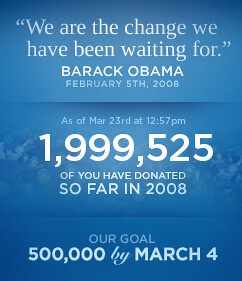
Way behind with a catch-up, so a long list :[
- "Hidden Costs" of Watching TV Online?
BBC swipe at The Torygraph, containing this gem: "Content providers, if they find their content being specifically squeezed, shaped, or capped, could start to indicate on their sites which ISPs their content worked best on (and which to avoid). I hope it doesn’t come to this." - Forget Everything You've Learnt About Project Delivery, Part 8: Benefits Measurement
- The Secret to Successful Project Teams
Couple of good pieces from CIO; first is part of a very useful series. - Searches for 'tibet' quadruple
- Court Backs Craigslist in Discrimination Brouhaha
Big implications. possibly. They can carry discriminatory housing ads ("no blacks, irish, dogs"). Odd when that's where all classifieds are moving to. - No 10 Twitters and Flickrs into life
- New Foreign Office website
Which Emma doesn't want my thoughts about ... - Power of Information: New taskforce and speech
- Military Report: Secretly 'Recruit or Hire Bloggers'
- Election breaches in Zimbabwe
Tom Watson picked up on another Google maps link-up, as happened in Kenya. Here's more about how Zimbabweans are using blogs to get around media censorship. - Obama's YouTube Speech Tops TV Ratings
That's 24hr news shows. - The online fall-out of the Daily Express apology to Madeleine McCann's family
Martin Belam spots a lot of hangovers from the apology on the Express' crap website. - The Daily Express is back on the McCann case
- What if Hillary Clinton gave a speech about gender? (And why she won't.)
- Galloway's Iranian propaganda?
Peter Tatchell on CIF. The comments on this were crazy. - Reader and ARIA: A new way to read
That's Google Reader and a Screenreader - The Royalty Scam
That's Billy Bragg editorialising for the New York Times. - The all-seeing eye
Nicholas Carr sort-of losing it. Again. - Texting-on-the-go injures 6 million Brits
They walk into lamp-posts en masse. Includes funny video. - This blog is garbage!
Seeing is believing. - Online video traffic up 178% in a year
- The Foolishness of Crowds (and certain erudite New York City professors)
Andrew Keen makes a useful point. Shock. - Not getting it may be a worldview thing
It is still early days ... - Firefox Goes "Organic"
Mozilla is green. - Super-Regulator’ Sharpens Focus On Accessibility
Ofcom sharpening its threats. - OurPress: websites for the rest of us
Neat project from Dave Briggs. - The Free Our Bills Campaign launches
Another plug :] - 1M+ Donations to Obama in March
Now 2m individuals. This campaign is changing lots of old ways of doing politics. - Set the Census data free
Simon Dickson yells at the Office for Stats about the 2011 census. - China unbans the Beeb
As the Dalai Lama keeps saying - what happens after the Olympics? - RSS to Newsletter Maker - A pitch to the Social Innovation Camp
Very neat idea from Tim Davies.. - Cyber attacks target pro-Tibetan groups
- In the Guardian: ‘we’re now in sight of victory’; so what next?
Charles Arthur for Free Our Data on Another Power of Information impact. - Municipal Wireless Success Demands Public Involvement, Experts Say
All going pear-shaped in US cities - but there's 'ope. - Links, libel and law
Emma Mulqueeny wants to be off Milliband's blogroll. - Google Sees Surge in Web Use on Mobile Phones
- Network to explore "civic function of news"
David Wilcox on another 'walled garden', this time at the RSA. - Morocco's Facebook faker is freed
- Web Technologies Scotland
JackP details great stuff about this event. - Secret Guide to Social Media in Government
Incredibly useful new guide. - [Roy Greenslade] Resign! Resign! Resign! Resign! Why four editors who libelled McCanns should go
- Web creator rejects net tracking
Sir Tim isn't a happy bunny. - Spare a thought for the people of Adelaide…
The hottest since records began. This is why Aussies take global climate change seriously - and vote accordingly. - BBC 'opens floodgates' to iPlayer hackers
- The high cost of a good reputation
eBay demolishing 'the wisdom of crowds', says Bill Thompson. - What is web science?
- Do Internet Ads, Content Effectively Reach All Ages?
Older users think websites are designed for the young. - Poll: Most Americans don't read political blogs (Reuters)
... but fully one quarter of all American adults do.
 Also: This was released on April 1st, but is apparently serious! Antarctic Polar Bear Relocation to Begin on Earth Day. Some Americans want to move thousands of them to the edge of the Ross Sea near Emperor Penguin colonies trapped by recent movement of giant icebergs . Nothing on the site about unexpected impacts - like happened with rabbits and foxes in Oz. Project is supported by oil drillers ('we're fed up being attacked') and 'Americans for tax reform' ... and lots and lots of American 'liberals'. Gore has his work cut out.
2
comments
labels:
accessibility,
Andrew Keen,
bill clinton,
blogging,
bytes,
censorship,
china,
Dave Briggs,
facebook,
firefox,
google,
hillary,
kenya,
law,
maps,
media,
mobiles,
new york times,
obama,
science,
stats,
tom watson,
TV,
video,
youtube,
zimbabwe
labels:
accessibility,
Andrew Keen,
bill clinton,
blogging,
bytes,
censorship,
china,
Dave Briggs,
facebook,
firefox,
google,
hillary,
kenya,
law,
maps,
media,
mobiles,
new york times,
obama,
science,
stats,
tom watson,
TV,
video,
youtube,
zimbabwe
Tweet This! ♦ Add to del.icio.us ♦ DiggIt! ♦ Add to Reddit ♦ Stumble This ♦ Add to Google Bookmarks ♦ Add to Yahoo MyWeb ♦ Add to Technorati Faves ♦ Slashdot it ♦
Subscribe to:
Posts (Atom)
 @PubSecBloggers